



How to design a tilapia RAS produce solution from A to Z ?
INDUSTRY NEWS


The Importance of Tilapia Farming
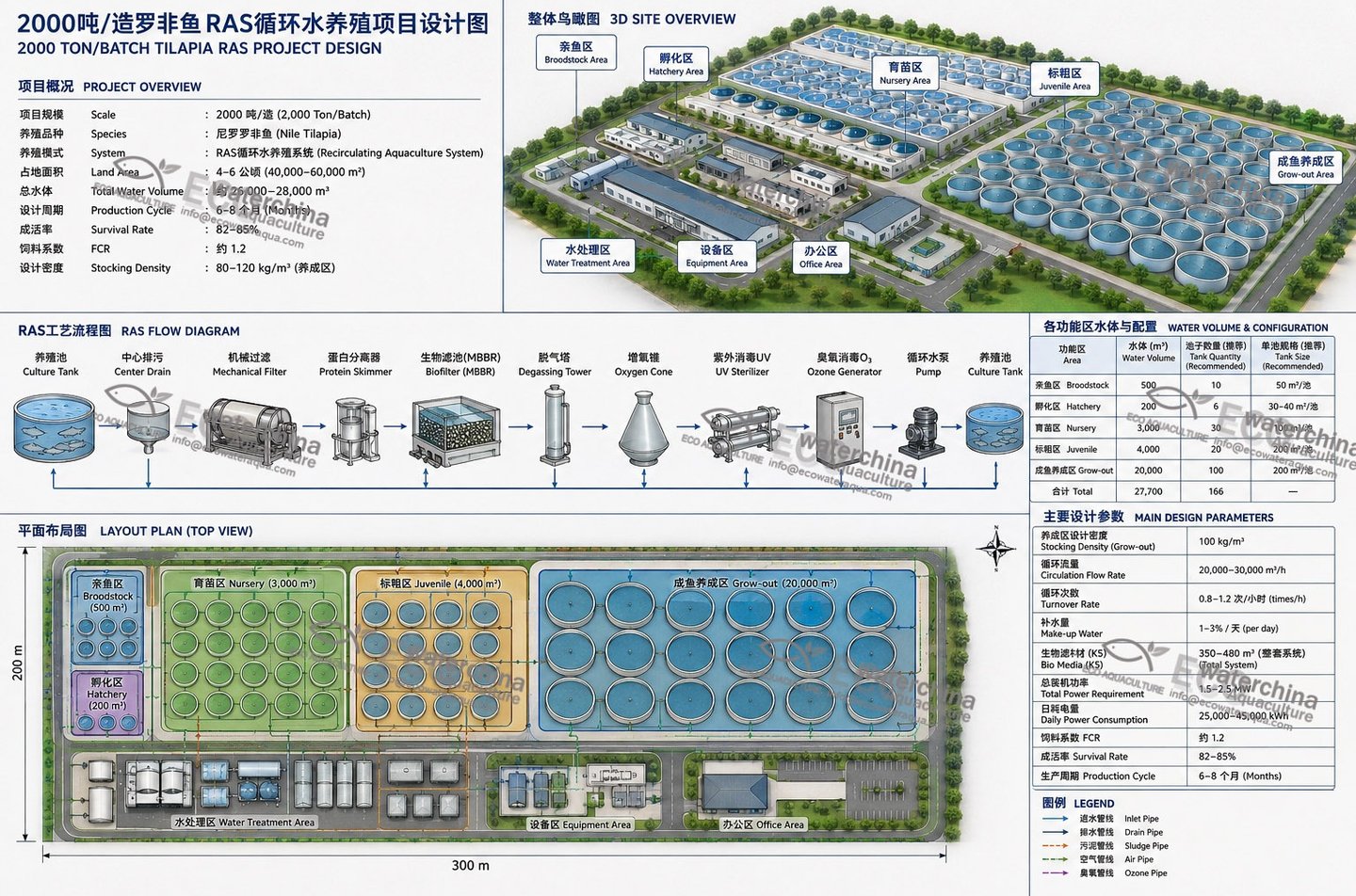
Tilapia, a high-protein aquatic product, is not only popular with consumers but also favored by fish farmers due to its rapid growth and strong adaptability. Designing a 2000-ton recirculating aquaculture system (RAS) is crucial for improving farming efficiency, reducing water waste, and minimizing the environmental impact of the farming process. This article will guide you from basic design to implementation details, showing you how to successfully build such a farming solution.。
Basic concept for designing a 2000-ton RAS
When designing a 2000-ton tilapia RAS (Rapid Aquaculture System) program, the first considerations are the size and shape of the ponds, as well as the layout of the water treatment facilities. Typically, several independent rearing ponds need to be set up within the farm, with the capacity of each pond adjustable according to actual needs. The depth and water flow rate of the rearing ponds must be designed to ensure that the tilapia can grow under optimal conditions.
Secondly, water quality management is crucial. To achieve good water quality, a suitable filtration and circulation system is essential. Equipment such as biological filters, mechanical filters, and ultraviolet sterilizers need to be configured appropriately to ensure water cleanliness and fish health. When developing a water quality management plan, the installation of a backup system should also be considered to ensure rapid switching to protect fish health in the event of a failure in the main system.
Implementation and daily management
After the design is completed, the implementation phase begins. During this process, selecting superior materials and equipment is crucial for ensuring the long-term stable operation of the system. While the initial investment in equipment is high, effective management and maintenance can reduce daily operating costs and improve aquaculture efficiency.
Daily management includes monitoring water quality indicators such as water temperature, pH, and dissolved oxygen levels. Immediate action is taken upon detecting any abnormalities to ensure fish health. Furthermore, regular equipment inspections and maintenance, as well as health checks on the tilapia, are essential parts of management. This minimizes aquaculture risks and provides better protection for fish growth.
Finally, data monitoring and analysis optimize the overall operational efficiency of the RAS (Research, Automation, and Storage) system. Realizing continuous water quality monitoring and recording fish growth data will help farmers make informed and rational decisions, thereby improving overall aquaculture efficiency.
In conclusion, designing a 2000-ton tilapia RAS requires meticulous attention to every detail from system construction to implementation, making it an efficient and sustainable aquaculture method. This process not only improves aquaculture standards but also provides valuable experience for the future development of aquaculture.
Why Choose Our 2000 Ton Tilapia RAS System?
Sustainable Fish Farming
Save more than 90% water compared with traditional ponds
Lower environmental impact
Reduced wastewater discharge
High Production Efficiency
Year-round fish production
Stable harvest planning
High stocking density
Better Biosecurity
Controlled farming environment
Reduced disease risk
Independent production modules
Smart Aquaculture Technology
Our RAS farms combine engineering design, automation, and AI technology to create the future of sustainable aquaculture.
Applications
Our Tilapia RAS solutions are suitable for:
Commercial tilapia farms
Indoor fish farming projects
Export seafood production
Government aquaculture projects
Aquaculture investment projects
Sustainable food production facilities
RAS fish farming system supplier
Tilapia farm design company
Indoor aquaculture system manufacturer
High density fish farming equipment
Turnkey aquaculture project solution
AI smart aquaculture system
Contact Us for RAS Project Design and Quotation
Send us your farm requirements, target production capacity, land area, and local conditions. Our team will provide a professional RAS system proposal and competitive quotation.
Contact us today for your customized 2000 Ton Tilapia RAS Aquaculture Solution and project quotation.